Desert Resorts Offering Ultimate Isolation
Modern travel often prioritizes convenience and high-density attractions. However, a growing group of travelers seeks the exact opposite: complete stillness, immense open spaces, and an absolute break from constant connectivity. The world’s grand deserts provide the perfect backdrop for this type of deep restoration. Far from being empty wastelands, these arid landscapes host some of the most spectacular, design-forward sanctuaries on Earth.
By prioritizing privacy, architectural integration, and minimal environmental footprints, these properties redefine true indulgence. Here is an exploration of the premier desert resorts globally that offer unmatched seclusion and an opportunity to disconnect entirely.
The Appeal of Arid Seclusion
True isolation has become one of the rarest commodities in modern society. Deserts present a unique environment where the mind can reset due to the lack of ambient noise, visual clutter, and industrial interruption. The stark beauty of sand dunes, jagged canyons, and ancient rock formations forces a shift in perspective.
Guests at these remote properties find that the absence of urban distraction heightens the senses. The crisp morning air, the shifting colors of sandstone at dusk, and the profound silence of the night create a therapeutic environment. This form of travel focuses less on frantic sightseeing and more on matching the slow, intentional rhythm of the natural world.
Architectural Marvels in the American Southwest
The high desert of Utah holds some of the most dramatic terrain in North America. Tucked away within a protected valley in Canyon Point, minimalist architecture demonstrates how a resort can blend into its geological surroundings. Rather than competing with the massive mesas and deep canyons, the structures utilize raw concrete, natural stone, and clean geometric lines to mimic the local rock formations.
The experience here centers on profound silence and vast personal space. Pavilions and suites open directly onto views of the desert floor, ensuring guests never feel crowded.
-
Geological Immersion: Guided hikes through narrow slot canyons reveal millions of years of earth history.
-
Total Privacy: Private terraces feature outdoor fireplaces and plunge pools positioned to face empty expanses.
-
Restorative Design: Large windows frame the changing light on the mesas, acting as living artwork throughout the day.
Further south in the Sonoran Desert of Arizona, historic properties utilize natural thermal springs to provide a different type of isolated wellness. Surrounded by rugged mountains, these historic oases rely on subterranean waters and local agriculture to offer a completely self-sustained sanctuary where the outside world feels thousands of miles away.
Untamed Wilderness along the African Coast
Namibia contains some of the oldest and most extreme desert landscapes on earth. Where the towering dunes of the Namib Desert meet the Atlantic Ocean, the sense of isolation becomes absolute. In areas like the Kaokoveld and the private NamibRand Nature Reserve, luxury resorts operate on a scale of space that is hard to comprehend.
Lodges in these areas are often built on stilts or elevated platforms to leave the fragile desert floor undisturbed. The architecture frequently utilizes canvas, local timber, and glass, creating a sophisticated version of old-world expedition camps.
-
Astrotourism: Free from light pollution, these reserves offer some of the darkest night skies on Earth, complete with state-of-the-art research telescopes for guest use.
-
Unique Wildlife Adaptation: Travelers can track desert-adapted elephants, rhinos, and lions that have learned to survive in hyper-arid riverbeds.
-
Endless Vistas: Villas feature retractable roofs or floor-to-ceiling glass walls, allowing guests to watch the shifting red dunes without leaving their beds.
The isolation here is physical as well as visual. Many of these lodges require light aircraft transfers to access, ensuring that the number of human beings within hundreds of square miles remains incredibly low.
Ancient Splendor and Modern Privacy in the Middle East
The Arabian Peninsula has a long history of desert hospitality, rooted in Bedouin culture. Today, this heritage translates into ultra-private sanctuaries hidden within massive dune fields. Deep within the Empty Quarter, or Rub al Khali, resorts resemble ancient fortress cities rising from the shifting sands.
These properties offer a dramatic contrast between the harshness of the exterior environment and the refined comfort inside. Sweeping sand dunes, some rising hundreds of feet, surround the villas, creating natural privacy barriers between accommodations.
-
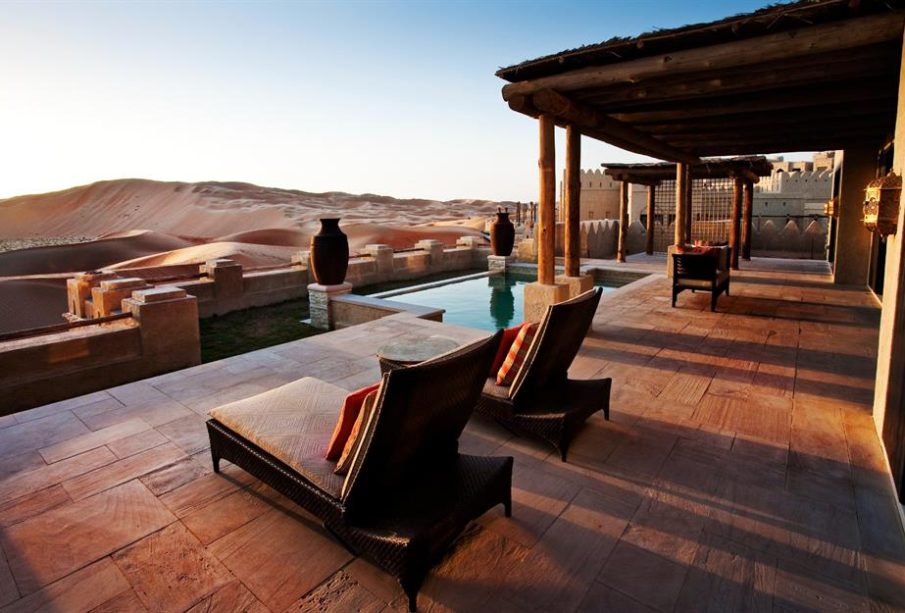
Private Oasis Living: Individual villas include temperature-controlled infinity pools that seem to spill directly into the empty dunes.
-
Cultural Exploration: Activities center on traditional practices, such as falconry displays, camel treks at dawn, and Arabic star mapping.
-
Therapeutic silence: The immense mass of the dunes absorbs sound, creating a quietness so absolute that guests can hear the wind moving individual grains of sand.
In regions like AlUla in Saudi Arabia, the focus shifts toward sandstone canyons and ancient archaeological sites. Resorts here are tucked into hidden valleys, using eco-luxury design principles to protect the surrounding history while offering guests an intimate connection to a landscape unchanged for millennia.
Navigating the High Altitudes of South America
The Atacama Desert in Chile is known as the driest non-polar desert in the world. Situated at high altitude, this landscape features salt flats, active geysers, and intense volcanic peaks. The luxury resorts operating around San Pedro de Atacama emphasize open-air living and deep wellness.
The design philosophy in the Atacama relies heavily on earth tones, adobe brick, and locally woven textiles. This ensures the structures remain cool during the intense daytime sun and retain heat during the frigid desert nights.
-
Excursions into the Extreme: Guests can spend days exploring high-altitude lagoons filled with flamingos or walking across glistening salt crusts.
-
Astronomical Clarity: The combination of high altitude, low humidity, and zero light pollution makes this the premier location for viewing the southern hemisphere sky.
-
Natural Wellness: Thermal pools fed by volcanic springs provide relaxation after long days of high-altitude trekking.
Planning the Ultimate Isolated Escape
Visiting these ultra-remote destinations requires a different approach to preparation than a standard luxury vacation. Because these properties are situated far from major urban centers, logistical planning is essential for a seamless experience.
-
Transportation Logistics: Many top-tier desert resorts require chartered flights, four-wheel-drive transfers, or long journeys through rugged terrain. Travelers should coordinate arrival details directly with the property.
-
Seasonal Awareness: Deserts experience extreme temperature fluctuations. A region that is pleasant in winter can experience intense heat during summer months. Researching the local climate ensures the environment matches your personal comfort levels.
-
Intentional Packing: Due to the remote nature of these locations, replacing forgotten items can be difficult. High-quality sun protection, durable footwear for rocky terrain, and layers for cold desert nights are crucial.
Embracing ultimate isolation means stepping away from the constant noise of modern life. By choosing a destination that values space, silence, and natural integration, travelers return home with a renewed sense of clarity that only the desert can provide.
Frequently Asked Questions
How do remote desert resorts secure a reliable water supply?
Most isolated desert resorts utilize private, deep-water wells tapping into underground aquifers. Additionally, they employ advanced graywater recycling systems and reverse osmosis water filtration plants to minimize waste and ensure self-sufficiency without depleting local surface resources.
What happens in the event of a medical emergency at these locations?
Top-tier remote resorts maintain on-site medical staff or first responders trained in wilderness medicine. For severe emergencies, properties maintain direct communication lines with helicopter evacuation services and regional trauma centers to ensure rapid transport.
Are these isolated environments safe from extreme weather conditions?
Yes, these structures are engineered specifically to withstand the unique challenges of their environments, including flash floods, high winds, and extreme heat. Resort management closely monitors regional meteorological data to keep guests safe and informed.
Can travelers with dietary restrictions be accommodated in such remote areas?
Despite their isolation, luxury desert resorts source high-quality ingredients via dedicated supply chains or cultivate items in on-site hydroponic greenhouses. Culinary teams routinely tailor menus to specific allergies, preferences, and restrictions with advanced notice.
Is high-speed internet available at these properties?
While the main goal of these resorts is disconnection, most maintain high-speed satellite internet connections in the main lodges or private villas. This allows guests to remain in contact with the outside world if necessary, though many choose to deactivate it.
Do these resorts allow children or are they adult-only sanctuaries?
Policy varies by property. Many isolated resorts cater strictly to adults to preserve a quiet, meditative atmosphere. However, some welcome families, offering educational programs focused on desert survival, geology, and astronomy tailored for younger guests.